A net sieve is not interchangeable with every basket, strainer, or filter in a kitchen: each design controls a different combination of particle retention, drainage, hygiene, and throughput. By the end, you will be able to match an application to a measurable sieve specification and assess whether a manufacturer can supply consistent, food-contact-safe equipment.
Key takeaways
- Match mesh aperture to the smallest particle you need to retain.
- Choose fixed sieves for consistency and interchangeable systems for varied tasks.
- Request material grades, food-contact declarations, mesh specifications and cleaning guidance.
- Compare manufacturers using sample tests, dimensional checks and documented quality controls.
What Is a Net Sieve, and Which Kitchen Jobs Suit It?
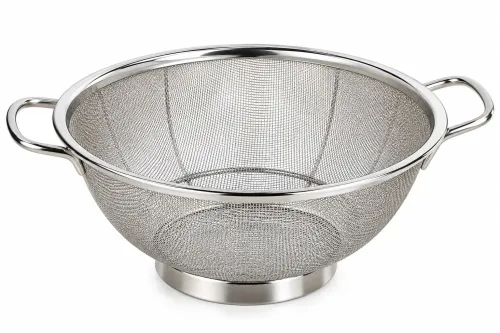
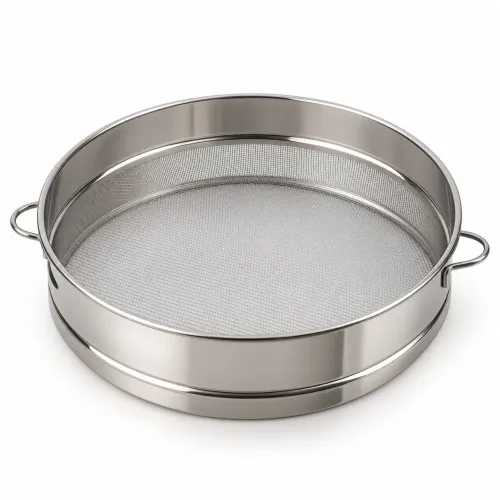
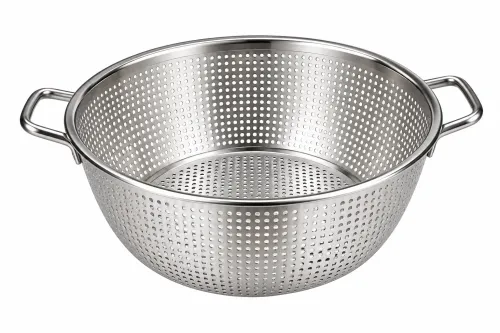
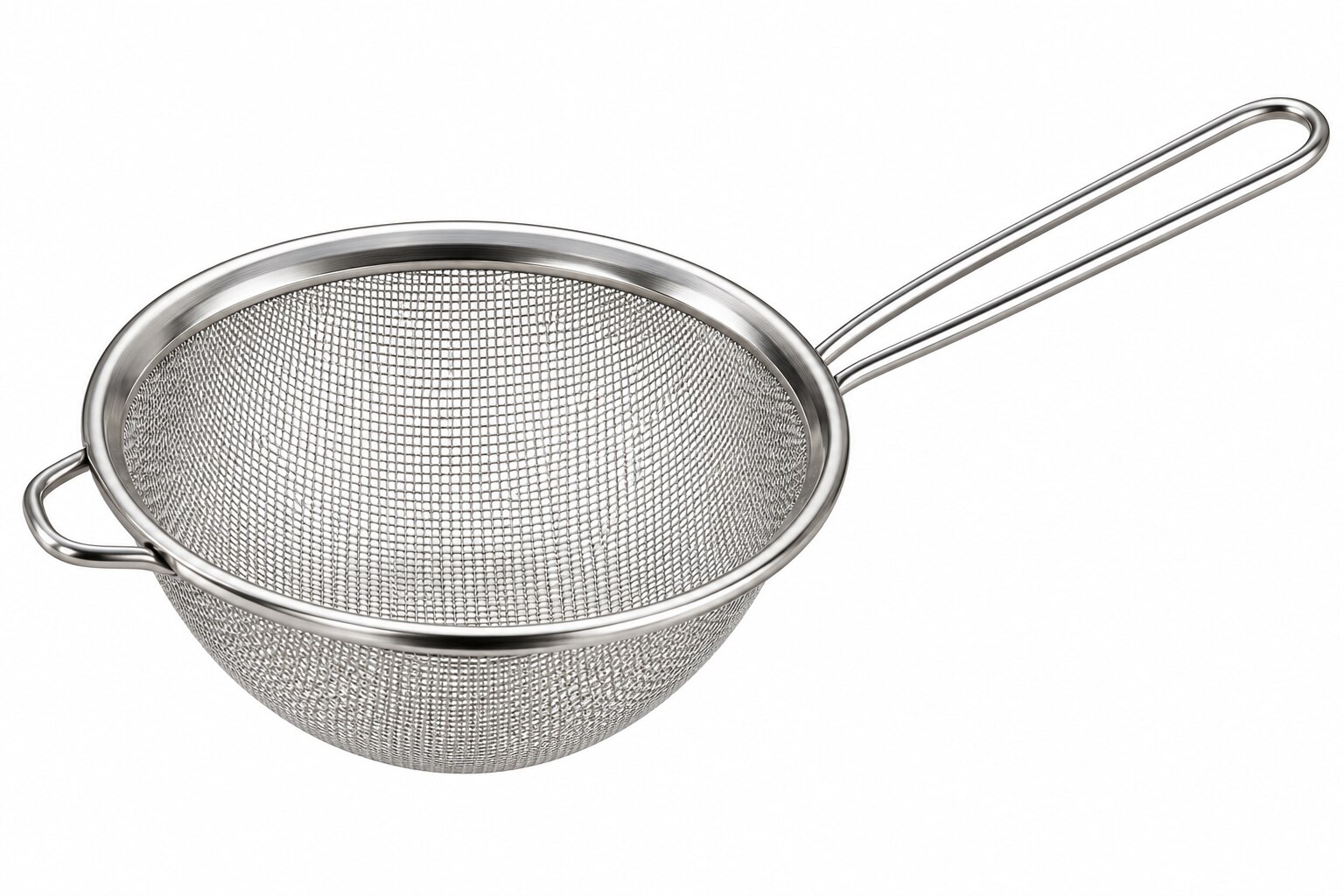
A net sieve definition is a frame or vessel fitted with woven wire mesh that separates particles by aperture size. Unlike a colander, which drains bulk water through larger holes, a liquid filter targets clarification and fine sediment retention.
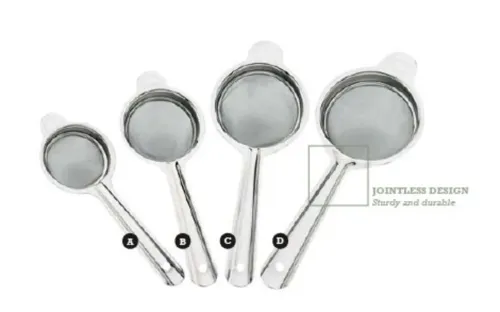
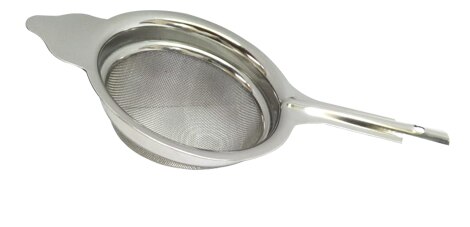
A tea strainer holds loose tea while allowing infusion; a coffee strainer comparison follows the same principle for brewed coffee. A perforated cut strainer uses punched openings, not woven wire, while a sink strainer catches waste at a drain.
| Product | Construction and purpose | Suitable job |
|---|---|---|
| Net sieve | Woven wire mesh for particle separation | Flour, spices, powders |
| Colander | Large drainage holes | Pasta and vegetables |
| Liquid filter | Fine mesh for clarification | Stocks, sauces, liquids |
| Tea or coffee strainer | Small vessel for infusion | Loose tea and brewed coffee |
| Perforated cut strainer | Punched sheet openings | Coarse, heavy material |
| Sink strainer | Drain-mounted waste catcher | Food scraps and debris |
Match the equipment to the load, not its label:
- Use a fixed or interchangeable sieve for flour, atta, powdered sugar, spices, and dry powders.
- Use a tea or coffee strainer for infusion, and a ghee filter with suitable fine mesh for clarified fat.
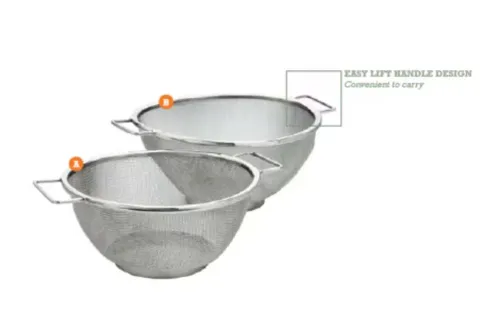
- Use a produce-washing basket for rinsing, or a colander or washing basket for pasta and vegetables.
- Use a liquid filter when retaining fine sediment matters.
Wet load, temperature, acidity, fat content, particle size, and required throughput determine the correct construction. A product called a “sieve” can blind with damp flour, deform under heavy vegetables, or clog with hot fat.
How Do You Specify Mesh for the Actual Ingredient?
Mesh count vs aperture is not enough: two meshes with the same count can have different clear openings and flow rates because wire diameter changes. Require the drawing to state:
- Nominal aperture size
- Wire diameter
- Open area percentage
- Aperture tolerance
- Whether measurements were taken before or after fabrication
Match the opening to the actual ingredient, not to “fine,” “medium,” or “coarse.” Measure, or obtain, the largest particle dimension; choose an aperture smaller than particles you must retain and larger than material that must pass. Confirm the choice with a trial using the intended load and throughput.
Construction changes the result as well:
| Construction | Best use | Main reason |
|---|---|---|
| Woven wire mesh | Fine, relatively uniform separation | Provides closely controlled openings |
| Perforated sheet | Coarse, heavy, or abrasive loads | Resists deformation under impact and weight |
For flour, starch, cocoa, and spices, request performance evidence at the intended humidity and throughput. Cake formation and blinding can sharply reduce capacity when a smaller aperture improves nominal separation.
For wet produce, pasta, and liquids, compare open area percentage, frame depth, support ribs, flatness under load, retention, and drainage—not aperture alone. Ask for a capacity or application trial.
For calibrated particle separation, specify the ISO 3310-1 sieve standard or ASTM E11, with inspection records. A kitchen strainer is not automatically a test sieve.
Should You Buy a Fixed Sieve or an Interchangeable System?
Choose a fixed sieve when one recipe needs repeatable output, fast setup, few operator decisions, and a permanently known opening. Choose an interchangeable system when one operation handles several products or screening grades and the shared frame saves more time than it consumes.
| Option | Best fit | Main trade-off |
|---|---|---|
| Fixed sieve | One product or recipe with a stable specification | Reduced flexibility and the cost of buying several units |
| Interchangeable sieve | Several products or grades using one frame | Sieve changeover time and greater installation-control demands |
A fixed sieve can become the wrong investment when a new application needs another aperture. An interchangeable system can introduce bypass, contamination, or shed particles if an insert is loose, damaged, or poorly seated.
Treat each insert as part of your allergen control kitchen equipment. Between allergens, remove, wash, inspect, dry, and record every insert; trapped residue or a retained insert can defeat the control plan.
Use keyed, labelled inserts with positive seating. Add a visual or written check that confirms the insert identity and sieve insert retention before production starts.
Ask the manufacturer for changeover instructions, insert retention details, replacement availability, and a demonstration using your actual frame and load. Compare the complete handling process, not flexibility alone: a system that saves storage space but adds ten minutes of uncertain setup can slow production and increase error risk.
What Food-Contact and Cleaning Evidence Should You Require?
Require a use-specific food-contact compliance specification, not a “food grade” label. Name the alloy or polymer, food types, maximum temperature, contact duration, and exposure to acidic, salty, fatty, or alcoholic foods. State the stainless steel sieve grade, surface condition, and fabrication method; 304 or 316 alone does not predict performance in every service.
Ask for evidence covering chloride exposure, cleaning chemicals, heat, crevices, and carbon-steel contamination from tooling. Inspect the finished sieve for hygienic construction:
- Continuous rim and mesh termination without gaps or exposed sharp wire
- Smooth weld beads and folded wire ends without roughness or trapped soil
- No unsealed solder, inaccessible handle joint, or dirty frame-to-mesh transition
- Approved detergent chemistry, maximum wash temperature, and soaking restrictions
- Guidance for dissimilar-metal contact and chloride-bearing cleaners
- Dishwasher or industrial-washer compatibility for the intended cycle
For European Union supply, request the applicable Declaration of Compliance under Regulation (EC) No. 1935/2004 and evidence of good manufacturing practice under Regulation (EC) No. 2023/2006. The documents must identify the material category and relevant restrictions.
For U.S. foodservice, assess the finished sieve against FDA Food Code equipment expectations: smooth, easily cleanable, corrosion-resistant surfaces that resist pitting, cracking, scratching, scoring, distortion, and decomposition. A supplier’s cleaning claim is incomplete without these service limits.
How Can You Test and Compare Net Sieve Manufacturers?
Test net sieve manufacturer selection by linking every claim to a record, measurement, or repeatable production trial. Start with a first-article inspection: approve one sample against a drawing, then request lot-level records for:
- Aperture size, wire diameter, frame dimensions, weld integrity, flatness, and material identity
- Stated tolerances, inspection method, lot number, and production date
- Confirmation that production parts match the approved sample
A sample can pass while a changed wire supplier, welding method, polishing process, or tooling alters open area, flatness, or cleanability. Require lot traceability so you can isolate sieves used for allergen control or a defined product cut.
Run a sieve application trial with the intended flour, spice, tea, coffee, ghee, produce, pasta, or liquid at the expected load, humidity, temperature, and throughput. Record retained particles, pass rate, drainage time, blinding, cleaning time, and damage after washing. Do not accept mesh size as proof of capacity.
Check the supplier’s evidence against catalogue language:
| Check | Repeatable evidence | Warning sign |
|---|---|---|
| Aperture | Drawing and lot measurements | “Fine” or “medium” only |
| Construction | Weld, flatness, material records | No joint or alloy identification |
| Cleaning | Written limits and washer guidance | Stainless steel claimed without limits |
| Support | Warranty, inserts, packaging, response to rejects | No replacement or nonconforming-lot process |
Compare warranty terms and replacement availability. Unistar Kitchen Strainers can be assessed properly by requesting drawings, material records, samples, and application-specific recommendations before a commercial order.
Related products
 | Inter Changeable Sieves Interchangeable Sieves offer versatile sifting solutions for diverse culinary needs. View product → |
 | Atta Sieves Atta Sieves, also known as Fixed Sieves, are specialized tools designed for sifting flour and other dry ingredients. View product → |
Frequently asked questions
What kitchen jobs suit a net sieve?
A net sieve suits particle separation, flour and spice sifting, sauce clarification, sediment removal and filtering liquids. It gives finer control than a colander because woven mesh uses defined apertures.
How do you choose mesh for an ingredient?
Start with the particle size you need to retain, then compare it with the sieve’s stated aperture and wire diameter. Test the actual ingredient because moisture, viscosity and clumping affect flow and separation.
Should you choose a fixed sieve or an interchangeable system?
Choose a fixed sieve when one process needs repeatable results and fast cleaning. Choose interchangeable screens when you handle ingredients with different particle sizes and can manage screen identification, storage and changeover.
What evidence should a net sieve manufacturer provide?
Ask for the mesh material grade, aperture specification, food-contact declaration, weld or joint details, cleaning instructions and batch or traceability information. Request a sample when fit, finish or flow performance matters.
Related products
 | Cut Strainers Specially designed to suit specific requirements We are leading manufacturers, suppliers and Exporters of Tea Strainer, Coffee Strainer, Wire Mesh... View product → |
 | Filters and Sink Strainers Filters and sink strainers are essential kitchen accessories for maintaining cleanliness and preventing clogs. View product → |
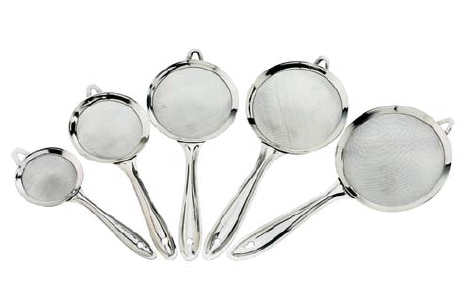 | KitchenStainers The Flat Handle Strainer simplifies kitchen tasks with its sleek design and efficient functionality. View product → |
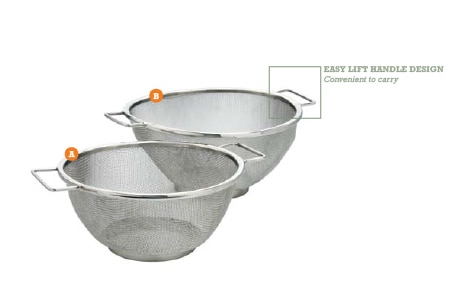 | Wire Mesh Colander / Fruit Basket Wire Mesh Colander / Fruit Basket We are known as a one of the leading Wire mesh strainer factories and Wire mesh Products manufacturers in India. View product → |